
Regaining autonomy
Can human society enjoy the state for which evolution fitted it?

Homo sapiens would not have survived 300,000 years were our societies prone to deep, chronic social divisions.
My guess is that our Stone Age divisions and disagreements panned out along ‘Pareto’ lines: we broadly agreed on 80% of issues, with room for nuanced disagreement on the other 20%.
But—eventually—politics and media arrived. Moreover, by the 20th Century both were controlled by corporations.
And just as war and illness are in the interests of corporations, so too is social division.
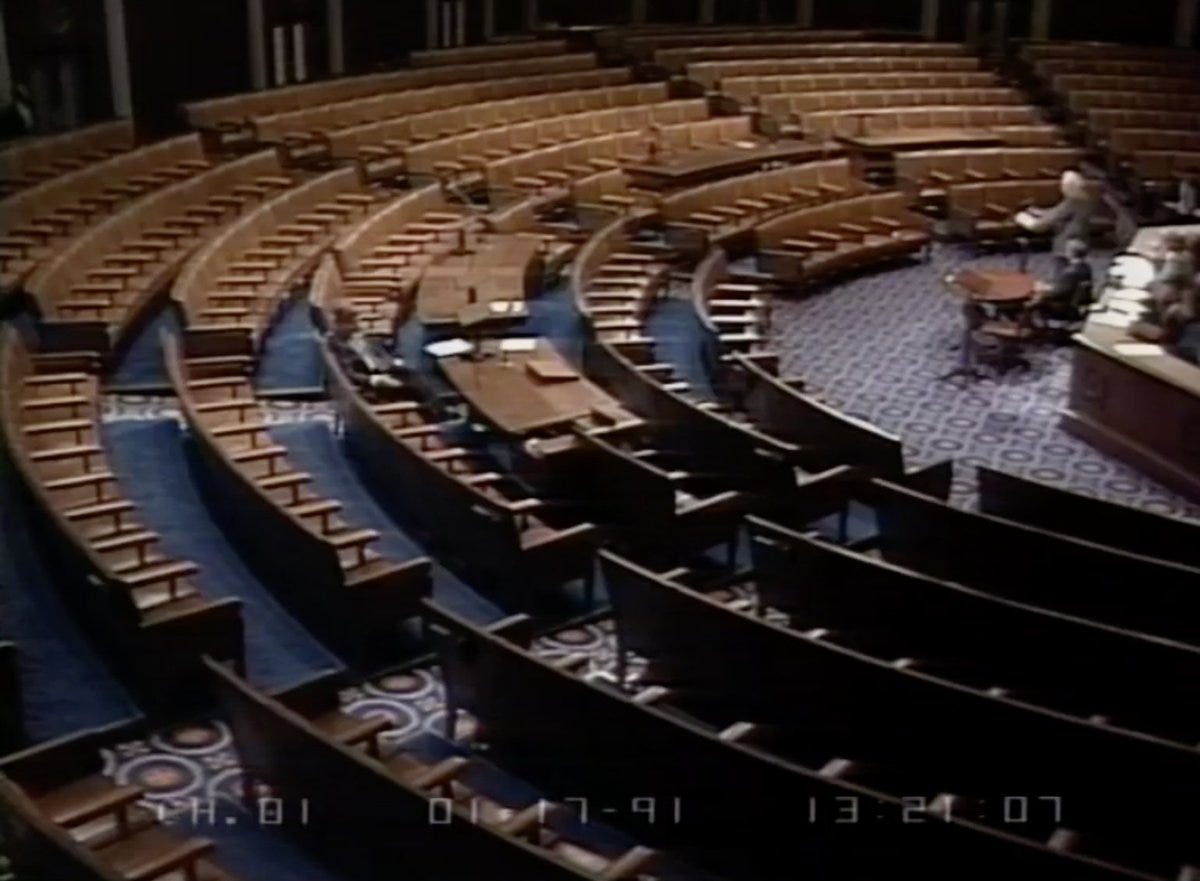
Bernie Sanders advising an empty House against the Gulf War, 1992
As the 20th Century gave way to the 21st, small differences were now transformed into a Manichaean divide.
Today, it’s 80% of issues that cause division, not 20%—and the divisions are deeper and more bitter.
Indeed we no longer have mere differences with the other side: we believe the other side wants to ‘annihilate us’, even ‘destroy our society’.
Once this wheel of mutual blame starts rolling, it proves as addictive as chocolate or cigarettes—as about a billion keyboard warriors can attest.
Our polarization has not stayed a Left v. Right thing. With elite criminality now so flagrant, opposition must not only be divided but sub-divided, so the old blocs are reduced in size.
Once, differing perspectives helped to forge a discussion that covered all the angles, and (at the end of that discussion) the most rational group decision.
The corporate capture of politics and information ended this 300,000-year dynamic.
Polarization pays better than social harmony. So long as the masses are tearing each other apart over ‘issues’, the elite (which is essentially nonpartisan) can continue the project of exploitation.
Modern democracy’s weak links are not immigration, terrorism, identity politics—inequality, inflation, war. Those are downstream.
The instruments by which our social pathologies arise—and by which power is transferred from our hands into those of the .1%—are monopoly media, political money, rusted electoral machinery, and civic alienation.
Because we’re addressing the wrong level, our governance is bogged down in issues no-one can solve.
This is self-evidently true in domestic politics—but it’s equally the case with international mass movements.
Most famously, the Arab Spring and Occupy movements failed to achieve concrete change, despite having great ideals and the support of tens of millions of people.
I’ve long argued that this was because they lacked an explicit constitutional goal. They tackled political questions—but did not redesign governance.
Governance must reflect the will of the populace—not the richest .1%. Until we grasp that nettle, we’ll live our days observing one crisis step into the shoes of the last.
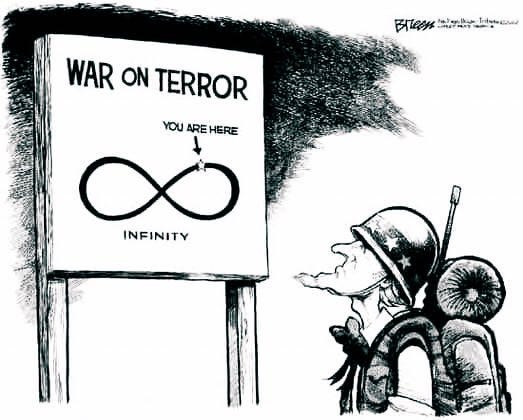
For so long as it’s fixated on social problems—and ignores the matrix through which those problems come into being—human society cannot regain its autonomy.